01 — Champion Motors · Automotive
The system that replaced a manager’s mental load.
Listen · the one-minute story
Champion Motors managed hundreds of vehicles moving through the service center every day. Yet the entire operation still relied on paper forms, handwritten windshield notes, and verbal updates between teams.
Without a shared source of truth, tracking a vehicle's status, locating its key, or understanding what was blocking delivery often required multiple conversations and manual coordination.
The challenge wasn't just replacing paper.
It was designing a digital workflow that gave every team real-time visibility into the service process while reducing operational overhead and improving coordination across the workshop.
Before any wireframe, I spent days at the service center — walking the floor with the mechanics, shadowing the manager between cars. The spec was written by watching people work, not by asking them what they want.
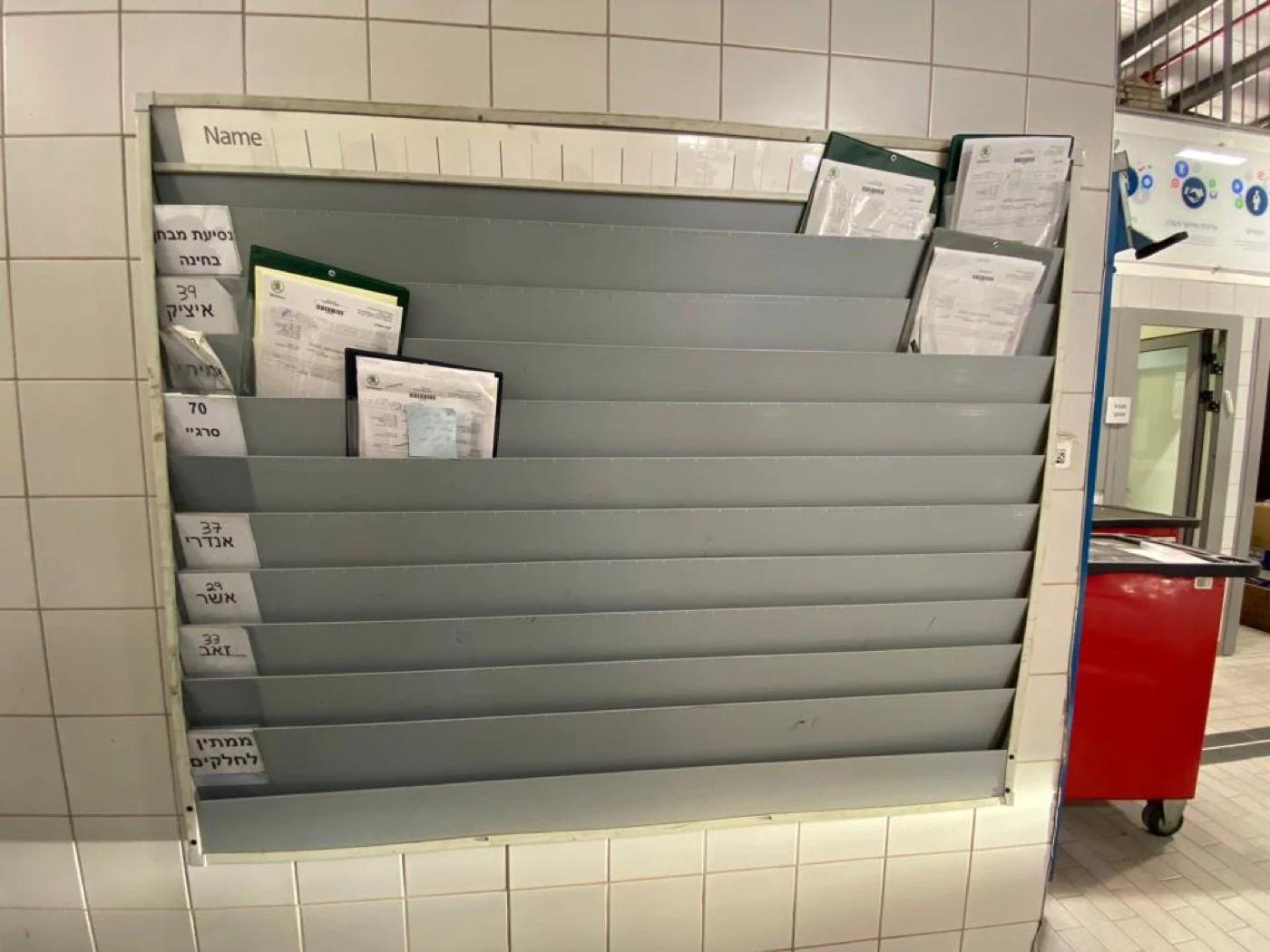
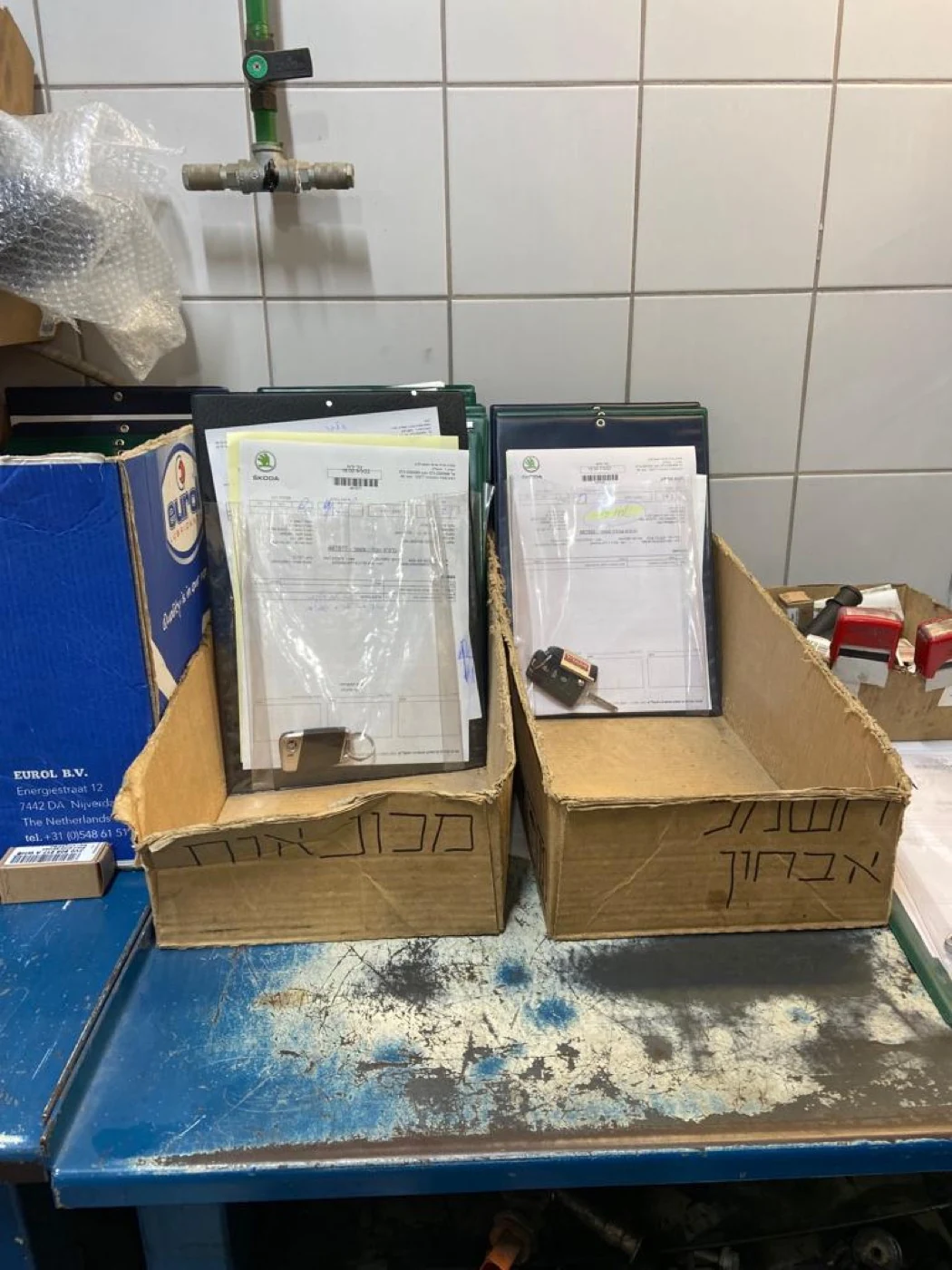
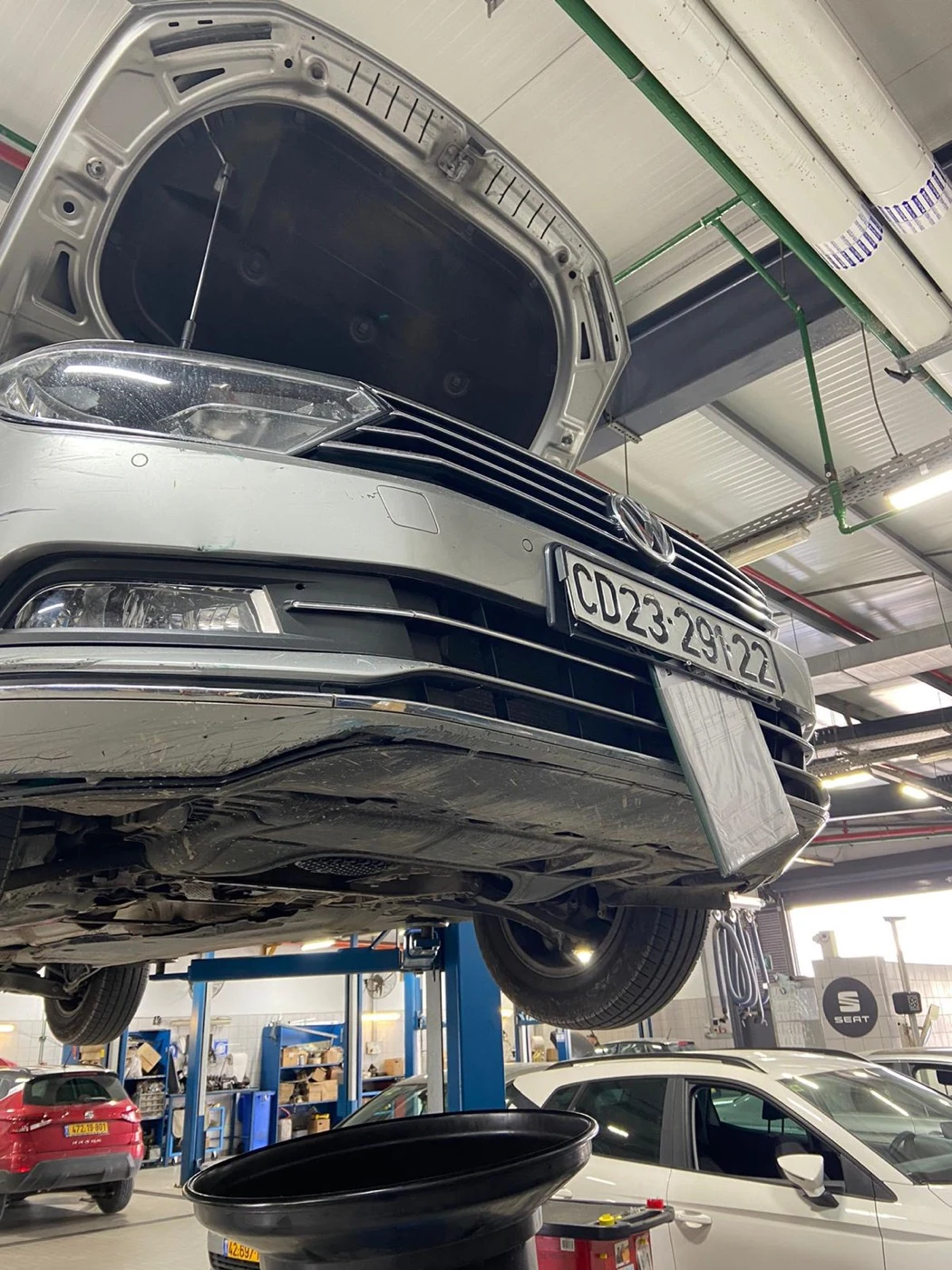
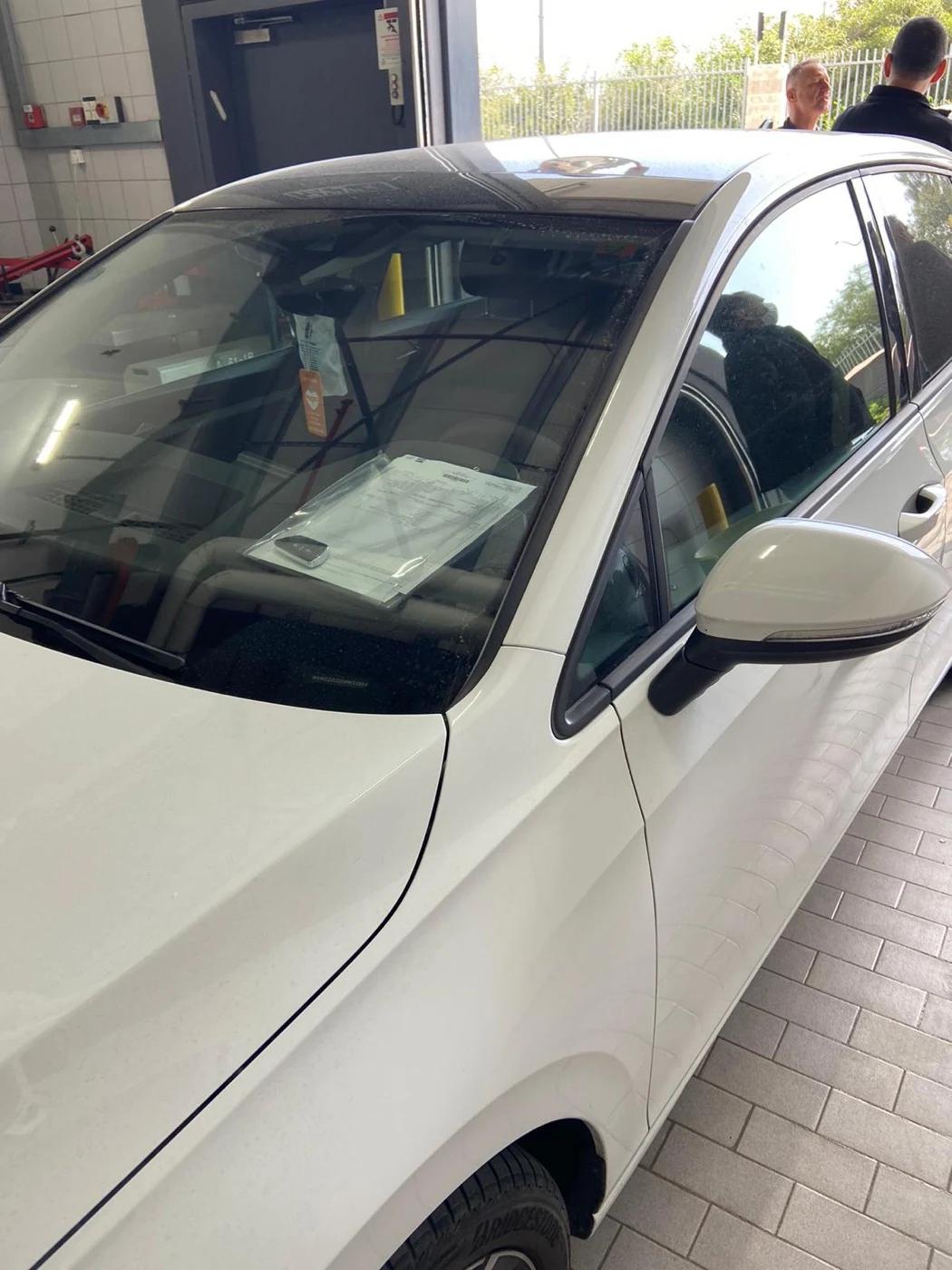
"We didn't solve the problem from the document. We solved it from the floor."
Before designing anything, we went to the shop. The insight: the system had to speak the language of the floor, not the language of the back office.
Before the build, success was defined in floor terms — not dashboards.
Ten decisions, set in the wireframe spec, carried through to the final UI.
 The wireframe prototype
Mechanics don't read 6-digit IDs while standing under a car. We reduced the reference to 2 memorable digits — fast to say, easy to recall across the floor.
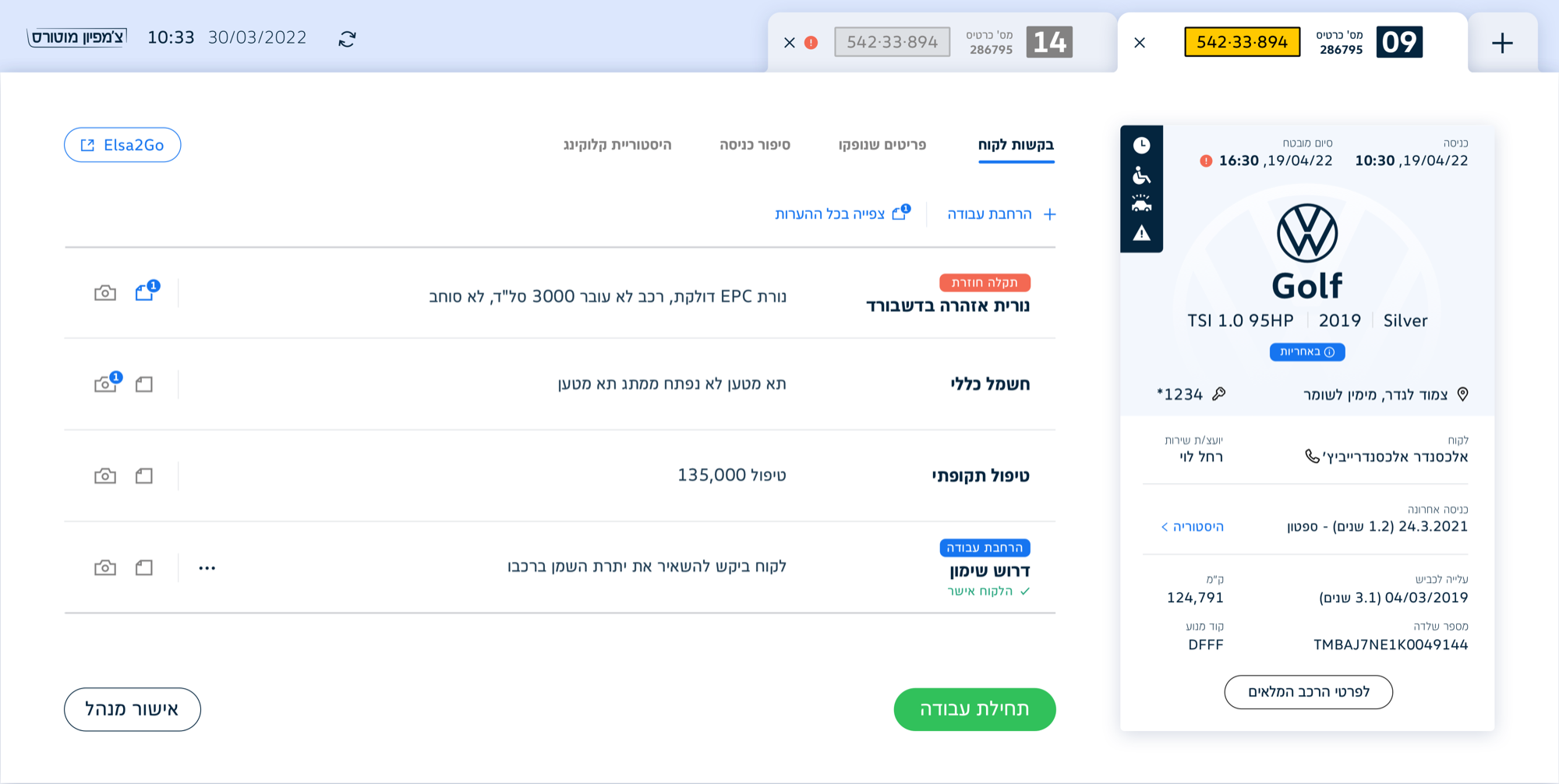
The license plate is the most familiar identifier on a car. We kept its visual format — font, proportions, framing — so mechanics could match it instantly without translation.
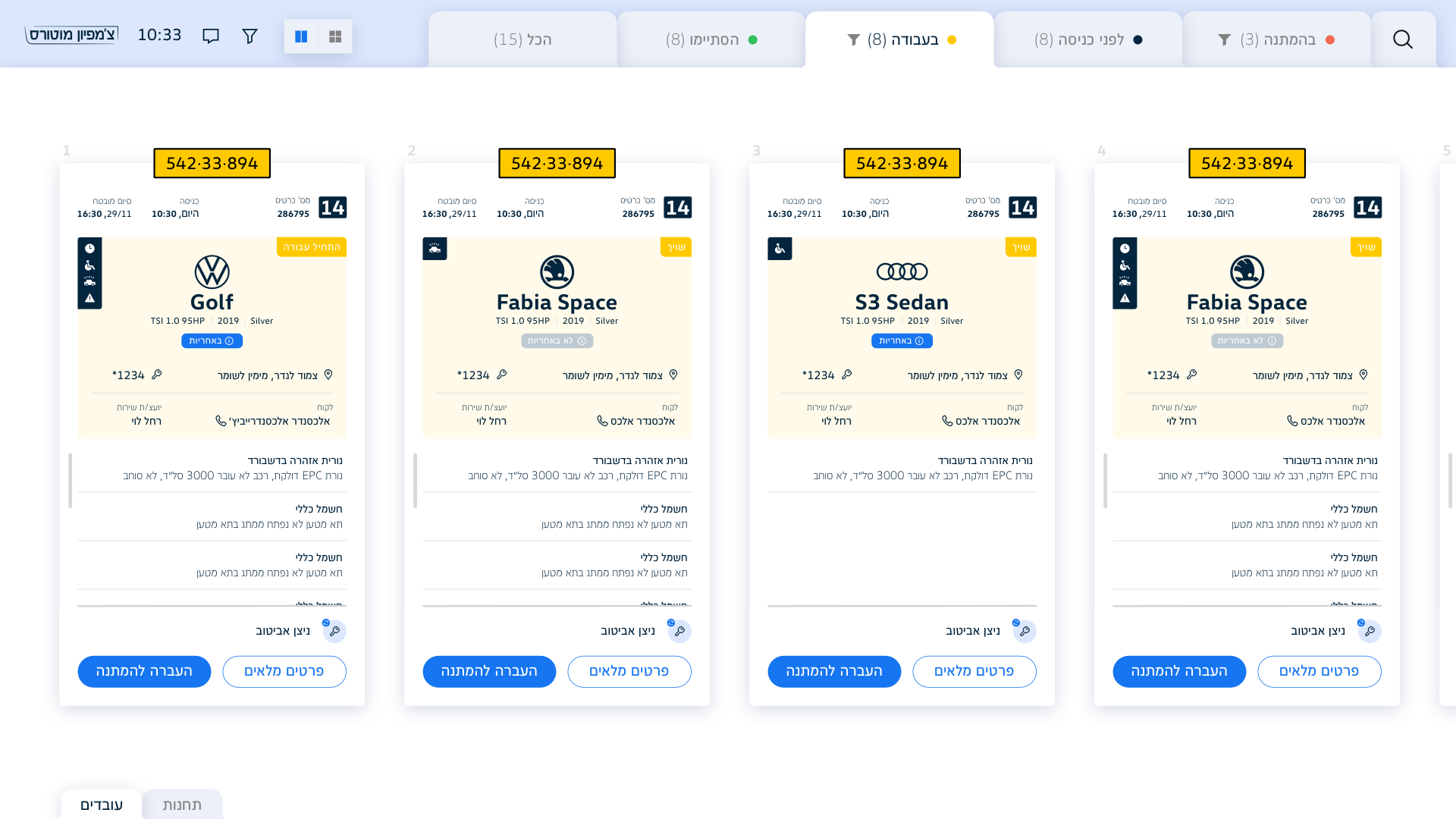
On the floor, eyes scan before they read. Status is communicated through color and icon first — text is a fallback. Red waiting, blue before entry, yellow in work, green done — the board reads from across the shop, no training needed.
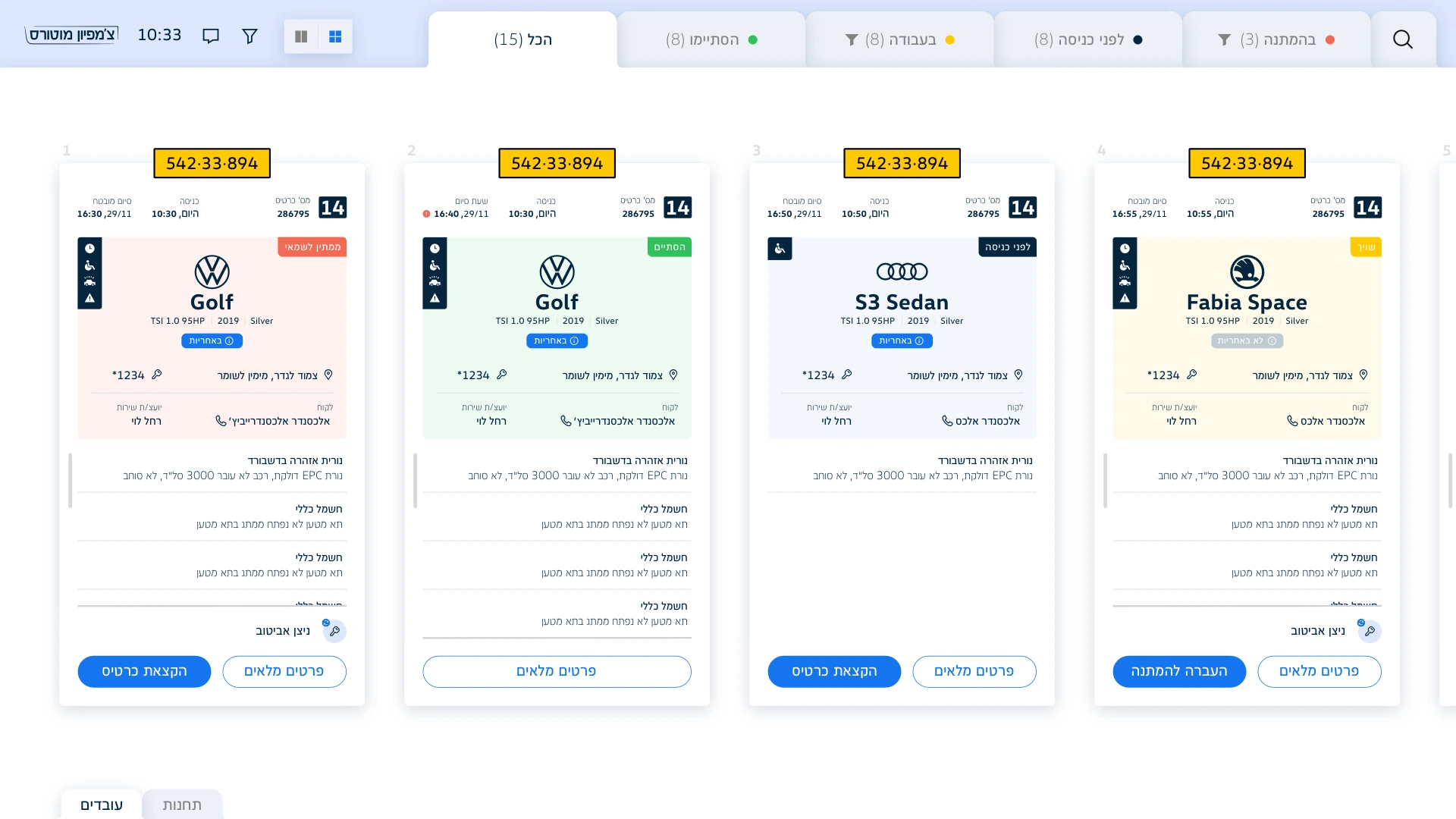
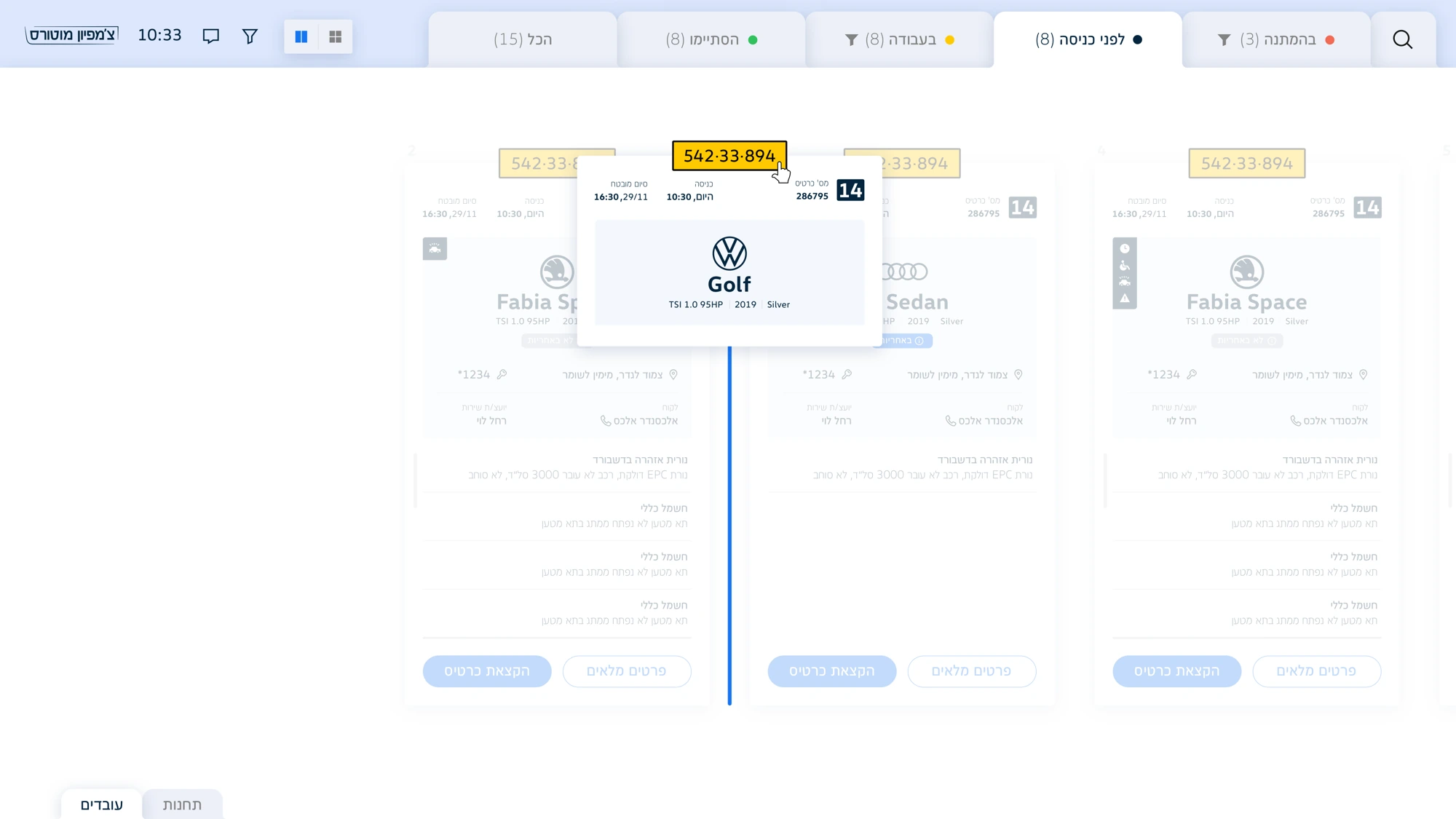
The manager needed manual override without losing system logic. Drag to reorder, but the system still surfaces urgent cases automatically — human judgment and machine priority working together. While dragging, the card shrinks and an insertion line marks where it will land — designed for fingers on a 50-inch touchscreen, not a mouse.
Mechanics wasted minutes finding cars. We added a simple lot map with bay positions — always visible on the job card. No more walking the entire lot first.
Finding the manager meant stopping work. We built one-tap fault escalation directly into the mechanic's interface — the alert appears on the manager's board instantly.
The most shouted question on the floor wasn't about the car — it was "who has the key?" Every job card shows the current key holder, and passing it on is one tap. The board answers before anyone has to yell across the shop.
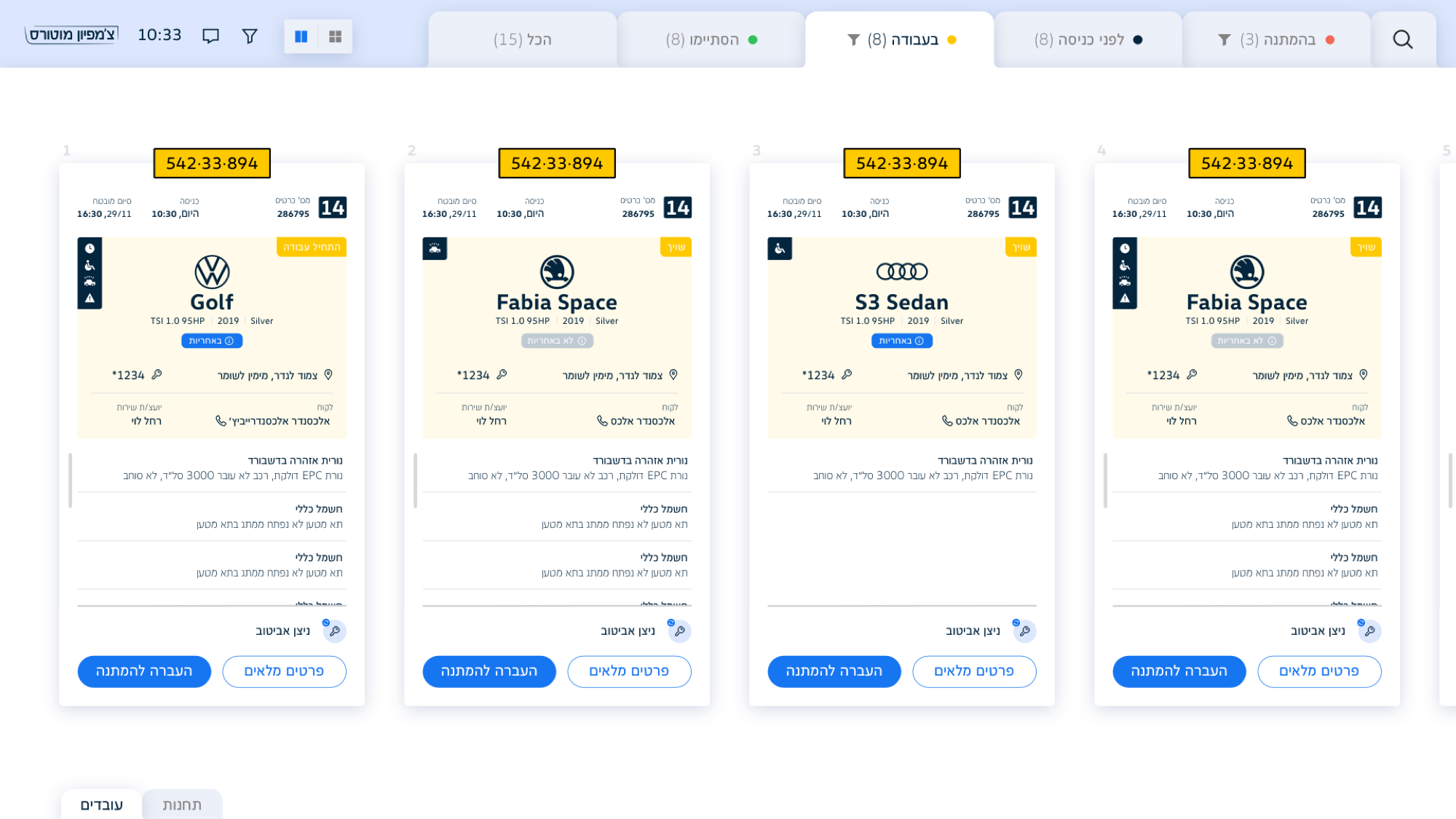
Some mornings the manager just wants to see everything at once. A second board view trims each card to its essentials, so twice as many jobs fit on the opening screen — one tap to switch, no scrolling to know the state of the floor.
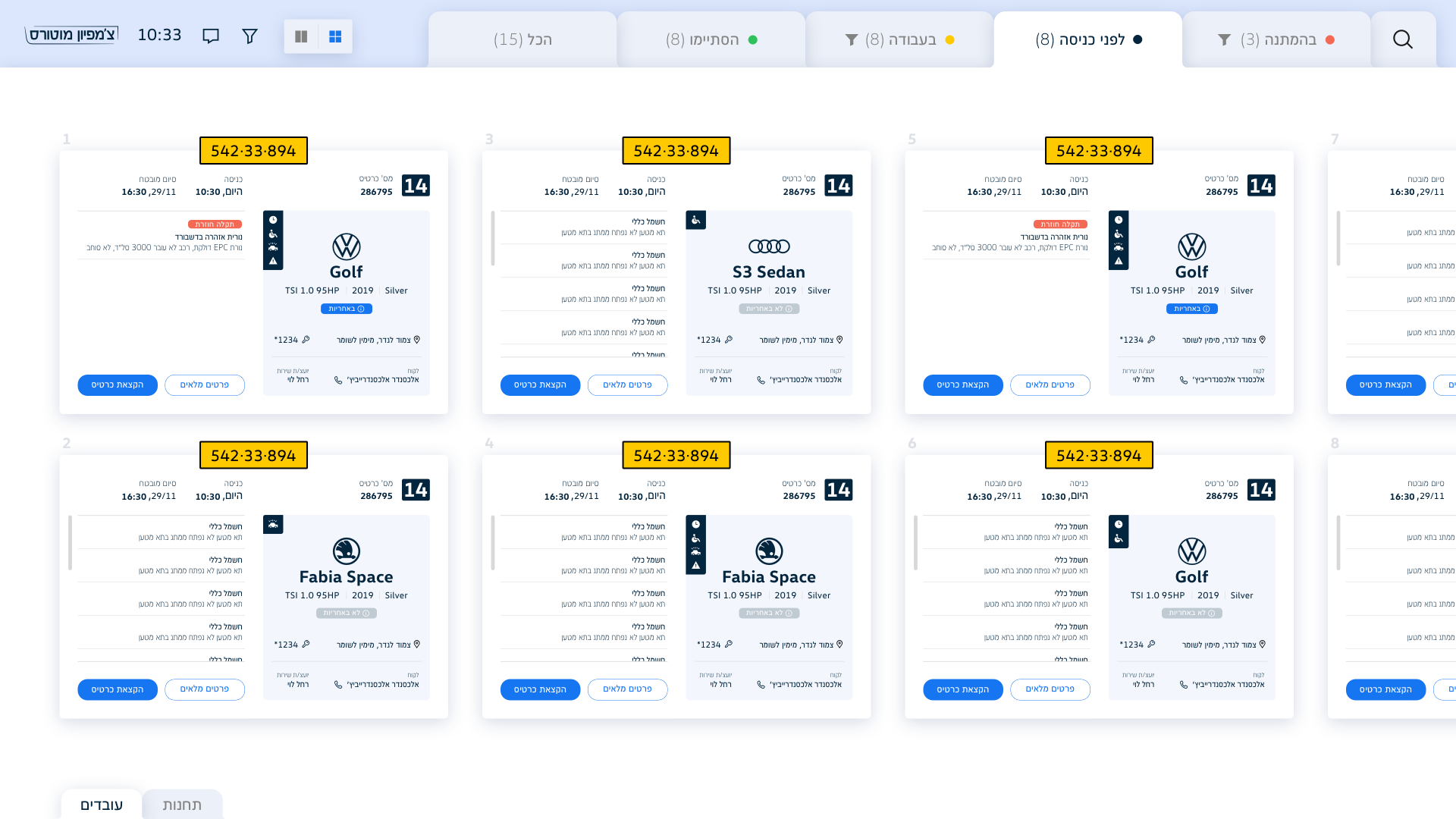
Every card can carry up to four status icons: a waiting customer, an accessibility vehicle, a brand-new car, a safety fault. The manager tells cards apart and prioritizes at a glance — and the same flags feed the automatic priority score behind the queue.
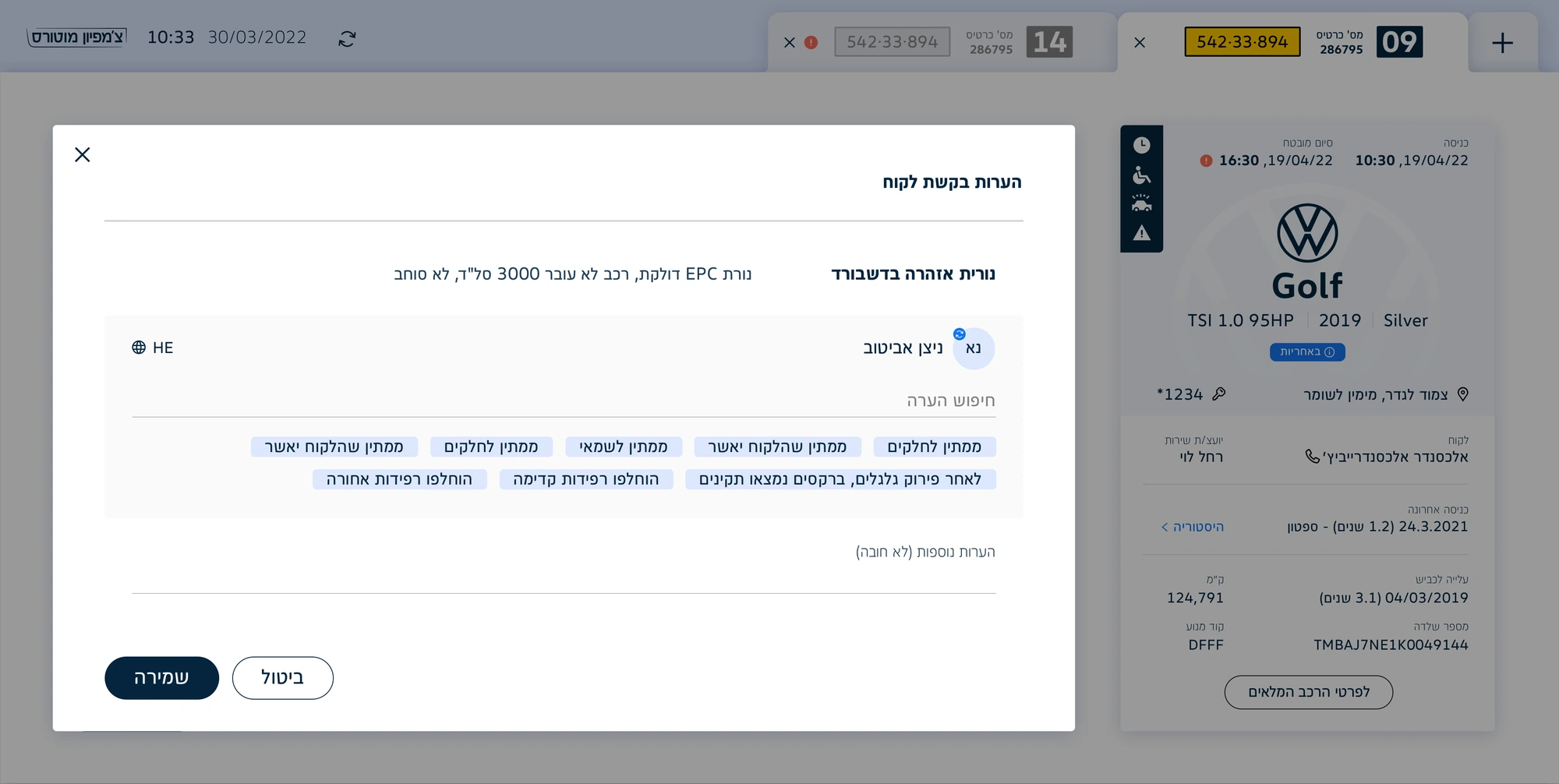
On the floor nobody wants to type. Notes are chips: the mechanic picks a ready-made comment, searches when the list grows, and free text stays optional for the rare extra. Comments are entered in Hebrew and read back in English, Russian or Arabic — one record, and every crew member reads it in their own language.
The system piloted in a handful of branches, then rolled out across every Champion service center — one floor manager and six to eight lifts per site, up to 200 cars a day, no paper anywhere in the chain, and no fixes requested after launch. The shouted question died: the manager reads the whole floor from the board, reprioritizes on the spot, and always knows who holds the key. The rollout earned Champion two industry awards — ITECH Excellence (the Israeli IT Bureau) and the People & Computers IT Award.
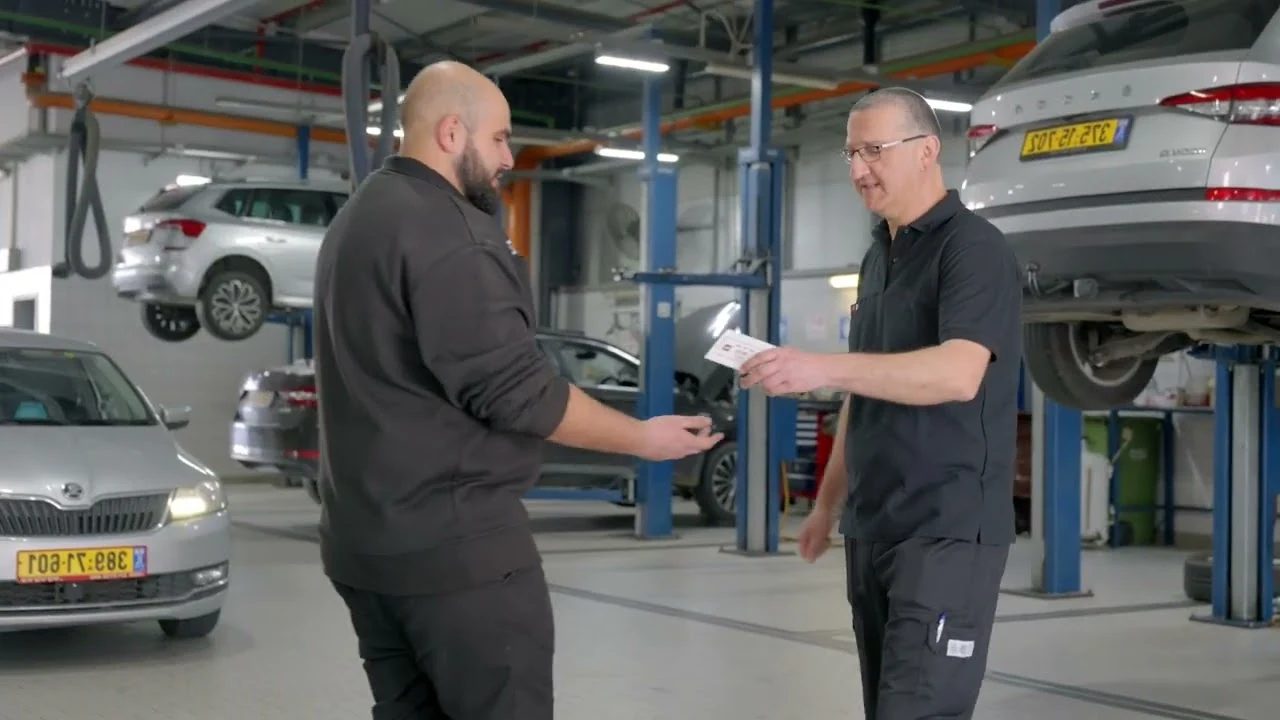 the client made a film about it →
The system shipped before the AI era. If I were designing it today, AI wouldn't be a feature bolted on top — it would sit inside the decisions that already worked.
A mechanic under a chassis doesn't type. Notes get dictated in Hebrew, Arabic or Russian — transcribed, translated and filed into the structured note system. The multilingual floor, solved by a model instead of a phrasebook.
Point the camera at the dashboard warning light; the job card drafts the professional fault description from the photo. The mechanic confirms instead of composing — media was already in the spec, now it does the paperwork.
The hybrid drag-and-drop stays. But the automatic weighting learns from every manual override the manager makes — his judgment quietly trains his own board.
Return-time estimates predicted from history — fault type, parts, floor load. At-risk promises get flagged hours before they're late, not when the customer is standing at the desk.
Led the project from discovery to delivery, owning the UX and product definition across two interfaces. I drove research, flows, wireframes, client alignment, development guidance, and QA, while directing the UI work delivered by a second designer.